Key Takeaways
- Late-winter skin is different from summer skin. Months of dry heat and cold air leave the barrier compromised, surface texture rough, and moisture depleted. It doesn’t reverse the day spring arrives.
- Read the skin before you commit. Visual assessment at the start of the appointment is worth two minutes. It can save you hours of difficult session work.
- Know when to reschedule. Severely compromised skin is a legitimate reason to push back an appointment. It’s not about being difficult — it’s about getting results.
- Technique adjustments matter. Dry, barrier-compromised skin responds differently under the needle. Glide behavior changes, saturation takes more attention, pacing may need to slow.
- Send pre-appointment instructions at booking. Most clients need to be told explicitly. Two weeks of daily moisturizing changes what you’re working with.
- Aftercare coaching is more important in spring. Skin that starts dry needs consistent, diligent moisture during the aftercare period — more than a summer client would.
- Natural glide products perform better on dry skin. Petroleum-based alternatives struggle on compromised skin. Natural formulations work with the skin instead of just sitting on top.
Can You Tattoo on Dry Winter Skin? (What Artists Need to Know)
Yes, you can tattoo on dry winter skin, but it requires specific technical adjustments. Winter-damaged skin has a compromised lipid barrier, leading to faster glide absorption, poor stencil adhesion, and difficult saturation. To get professional results, artists should assess elasticity first, use natural-ingredient glides to nourish the barrier, and consider rescheduling if the skin is actively cracking or flaking.
March is when we hear from artists about the same challenge: bookings are filling up, clients are motivated — and the skin walking in off a Central PA winter has been through months of cold air, forced heat, and benign neglect. It behaves differently under the needle than summer skin, and getting ahead of that makes a real difference.
The moisture’s gone. The barrier’s compromised. The texture is rough in ways that weren’t there in October. None of that reverses the day spring arrives.
What Actually Happens to Skin Over Winter
Winter skin isn’t just “dry.” The damage is more specific than that.
Cold outdoor air holds very little moisture. Heated indoor air strips what remains. Clients have spent months moving between these two environments every day — office buildings, heated cars, warm homes with forced-air furnaces running flat out. Every hot shower compounds it. Every week without consistent moisturizing adds up.
What you’re dealing with in the skin:
- The lipid barrier — the thin protective layer that holds moisture in — has been repeatedly depleted and inadequately replenished
- Surface texture is rougher, sometimes visibly flaky or tight-looking
- Skin absorbs product faster because it’s already moisture-deficient
- Cellular turnover tends to slow down in cold weather, meaning dead surface cells accumulate longer rather than shedding at their normal rate
None of this is dramatic. It’s the quiet accumulation of an entire season. And because it happens gradually, clients often don’t notice it themselves — until they’re sitting in your chair and you’re the one looking at it.
Reading the Skin Before You Start
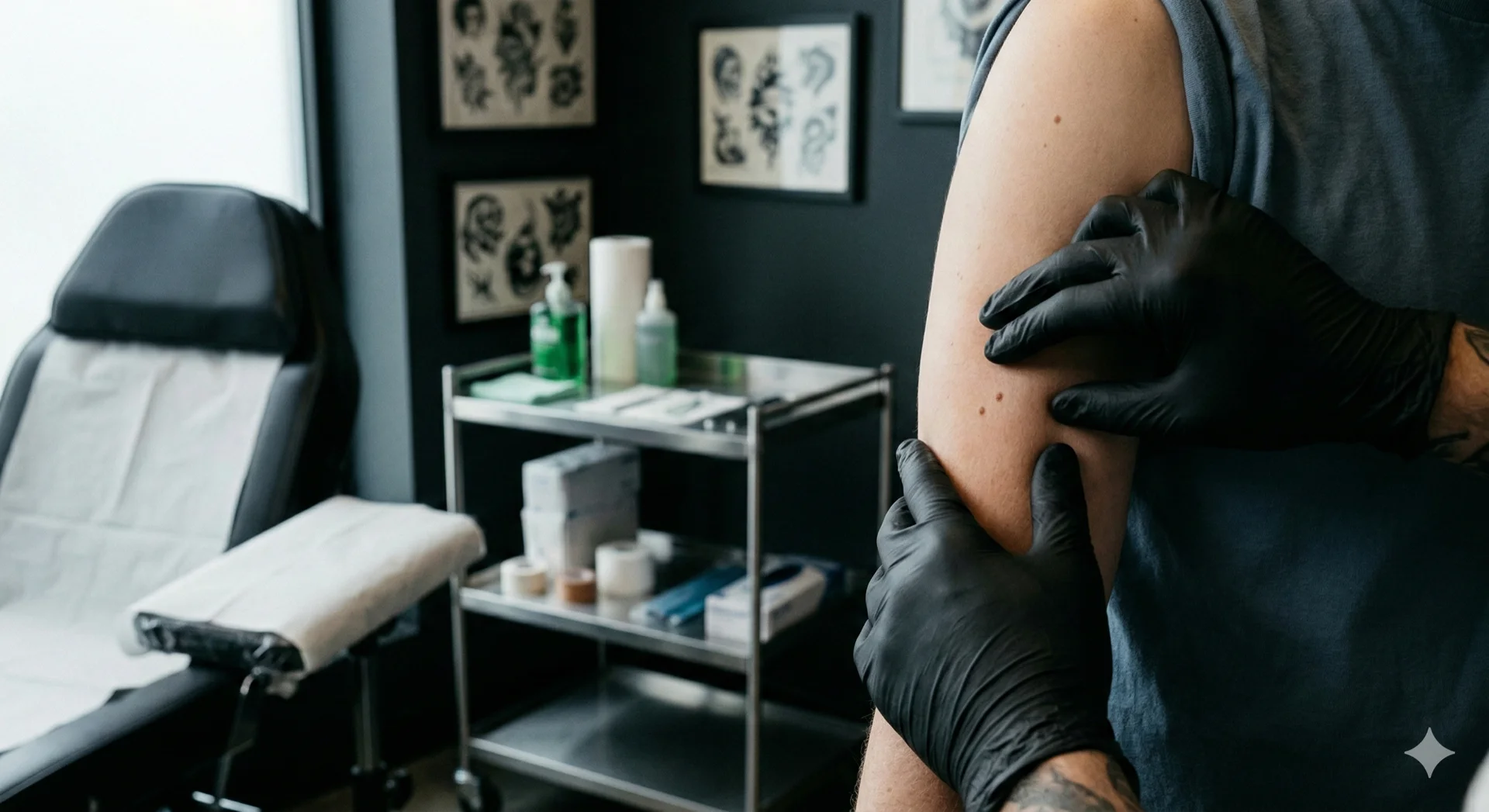
Two minutes at the beginning of an appointment can change how you approach the whole session. This is a habit worth building for every spring booking.
Visual signs to look for:
- Visible surface texture — roughness, fine lines in the skin that aren’t permanent features
- Flaking or dry patches, particularly in the tattoo area
- Skin that looks “tight” — pulled, slightly shiny, with reduced elasticity
- Ashiness or dull appearance, especially on darker skin tones
- Visible cracking in any area (the clearest signal that you’re working with compromised skin)
What to notice when you touch the skin:
- Reduced elasticity — healthy skin bounces back quickly, dry skin is slower
- How it responds to cleaning — severely dry skin may feel rough or slightly abrasive even after prep
- Temperature and tone: cold, tight skin tends to be drier than warm, relaxed skin
How compromised skin affects your work:
Dry, barrier-compromised skin absorbs glide faster. You’ll find yourself reapplying more often than you would in summer. Stencil adhesion can be less predictable — the surface just isn’t ideal. Ink saturation requires more attention; the rougher surface texture can give a false read on how well color is setting.
That’s not catastrophizing. That’s just what you’re working with, and knowing it upfront lets you adapt.
Assessment Before Commitment
Every appointment with a spring client deserves an honest look before you start. Not a long one. Just an honest one.
Proceed with adjustments:
- Surface texture is rough but skin is intact
- Some dryness visible but no flaking in the tattoo area
- Client moisturized in the days before as instructed
- Stencil adheres reasonably well after prep
Consider rescheduling:
- Visible cracking or skin that’s actively flaking in the tattoo area
- Client mentions they’ve completely neglected the area all winter
- Stencil won’t hold after two attempts
- Client is uncomfortable from skin tightness before you’ve started
- Any eczema or psoriasis flare-up in the area
Rescheduling isn’t failure. It’s professionalism. “Your skin needs another week or two of prep before we get the best results from this session” is a completely legitimate conversation. Most clients appreciate the honesty.
The alternative — pushing through on compromised skin — usually means a harder session, a client who’s uncomfortable and moving, and results that need more touch-up work. None of those outcomes serve your reputation.
Adjusting Your Approach for Compromised Skin
If the assessment says proceed, work with what you have.
Glide application:
Apply a slightly more generous initial layer. Dry skin is moisture-deficient from the start and will absorb product faster than you’re used to. Plan to reapply more frequently — not because your product is failing, but because that’s what the skin needs. Watch the work surface and don’t let it go dry between passes.
Natural glide products hold up better in this environment, and the reason comes down to what they’re made of.
Petroleum is purely occlusive — it creates a physical film on the skin’s surface but doesn’t interact with the skin’s moisture at all. On dry, depleted skin, that film disappears fast because the skin is moisture-hungry and absorbs product aggressively. The result is a working surface that needs constant replenishment and behaves inconsistently through the session.
Tattoo Luv is formulated with beeswax, shea butter, and coconut oil. Beeswax provides consistent slip that stays predictable on the surface rather than absorbing out from under you. Shea butter brings an emollient component — it conditions the skin surface while you’re working on it, not just coating on top of it. On winter-dry skin, that combination means fewer reapplications and a more consistent working surface from start to finish.
“I noticed the difference my first winter using Tattoo Luv. It actually works better on dry winter skin than the petroleum stuff I used to use. Goes on smoother, doesn’t disappear as fast.”
— Mike Mavretic, Skin Deep Tattoo LLC
Pacing:
Slow down slightly. Barrier-compromised skin shows the effects of being worked faster and harder. Give it a moment between passes to respond. You’re not doing less work; you’re doing the same work more thoughtfully.
Saturation:
Don’t trust your first read. Dry, rough-surface skin can look like it’s taking ink well when it actually needs another pass. Check saturation more carefully than you would on summer skin. Better to take the extra time now than to bring the client back for a touch-up that should have been avoidable.
Session length:
Be realistic about how much compromised skin can handle in one sitting. A client with severely dry, barrier-depleted skin may not hold up as well through a long session as the same client would in September. Factor that into your scheduling.
The Conversation Before the Session Starts
Part of what separates a smooth session from a difficult one is the two-minute conversation before you start.
With spring clients — especially first-timers or anyone who hasn’t been in since fall — a quick skin conversation at the start of the appointment tends to go a long way.
What to cover:
- What you’re seeing in the skin and what that means for the session
- Any technique adjustments you’re making and why
- What they should expect from the aftercare period given their current skin condition
- What diligent aftercare actually looks like for skin that’s starting from a moisture deficit
You don’t need to deliver a lecture. A few honest sentences. “Your skin is pretty dry from winter — that’s normal for March. I’m going to work with it but I want you to be extra consistent with your aftercare. More frequent moisturizing than you might expect.”
Most clients appreciate being told. It gives them context for what they’re experiencing, and it makes them more likely to follow through on aftercare instructions.
Aftercare Coaching for Late-Winter Tattoos
Skin that’s already moisture-deficient going into the session needs more consistent care during the aftercare period, not standard care.
What to tell them:
- “Moisturize more frequently than you think you need to. Dry air, both outside and inside, is working against you.”
- “Warm showers, not hot. Hot water strips moisture faster and your skin can’t afford that right now.”
- “If it feels tight or dry, apply a small amount of aftercare product. Don’t wait for a scheduled interval.”
- “Run a humidifier in your bedroom if you have one. The dry indoor air is your skin’s biggest enemy right now.”
- “Don’t run out of your aftercare product. Winter skin goes through it faster than summer skin.”
The product conversation:
The ingredient difference matters here. Petroleum-based aftercare creates a barrier on the skin’s surface — which slows moisture loss, but doesn’t add anything to skin that’s already depleted. For a client whose barrier started compromised going into the session, that’s a limited foundation for the aftercare period.
Tattoo Luv Lotion Bar contains beeswax, shea butter, and coconut oil — ingredients that actively moisturize rather than just sealing the surface. Shea butter’s fatty acid profile conditions the skin as it sits on it, not just on top of it. Coconut oil absorbs smoothly without heavy residue. Beeswax provides the protective barrier component without locking in dryness the way petroleum does on compromised skin.
It’s also the same product used as glide during the session, so the transition from session to aftercare is seamless. For clients starting from a moisture deficit, that active moisturizing during the aftercare period is what keeps the tattoo looking vibrant as it settles.
Make sure clients leave with enough product. A client who runs out midway through the aftercare period and falls back on whatever’s in the medicine cabinet is a client who may need an early touch-up visit. That’s preventable.
Pre-Appointment Instructions: What to Send at Booking
Most of the spring skin problem is solvable with two weeks of client preparation. The catch is that clients won’t do it unless they’re told to — specifically, directly, and early.
Here’s an example of what pre-appointment instructions might look like — artists we work with have found that something along these lines, sent at booking confirmation, changes what they’re walking into:
Thanks for booking with us. A couple of quick things before your appointment:
Your skin has been through a tough winter. To get the best results from your session, please moisturize the tattoo area daily for at least 10 days before your appointment. Use a fragrance-free lotion — nothing fancy, just consistent. The morning of your appointment, you don’t need to over-apply, but the skin should be in good condition going in.
Also: drink water. Hydrated skin from the inside matters too.
If you have any questions or your skin is showing a reaction to anything, reach out before your appointment so we can plan accordingly.
It takes 30 seconds to send and changes what you walk into. Clients who’ve been moisturizing for two weeks before their appointment are meaningfully different to work with than clients who haven’t thought about their skin since November.
The March Pattern
March and early April bring a booking surge from clients who’ve been waiting out winter — and they’re walking in off the driest stretch of the year. The artists who handle this transition smoothest are the ones who’ve built prep instructions into their booking process and have product stocked before the surge hits. That combination of client preparation and the right materials on hand is what keeps spring sessions running cleanly.
Tattoo Luv for Spring Sessions
Tattoo Luv Lotion Bar: Natural glide and aftercare in one product. Performs consistently on dry, barrier-compromised skin. No petroleum. Stencil safe.
Wholesale Pricing: Stock up before the spring surge. Inquiry form →
Resources for Artists
Sponsored Artist Program: Join Central PA’s growing community of professional artists. Apply here →
Questions? Reach out at [email protected]
Tattoo Luv is made by Momma Bears Creations in Enola, PA. Professional-grade, 100% natural, trusted by Central PA artists.