Key Takeaways
- Spring skin is transitional: Post-winter dryness fades unevenly — many artists find the canvas varies significantly from person to person and area to area through March and April.
- Stencil behavior shifts: Returning humidity and warming skin temperature change how transfer gel behaves. What worked in January may need recalibrating.
- Glide performs differently on hydrated skin: Warmer, better-moisturized skin absorbs product less aggressively than winter skin. You may notice you’re reapplying less.
- Client prep simplifies: Spring skin doesn’t need the intensive pre-session moisture push winter demanded, but sun exposure becomes relevant again.
- Studio environment shifts: Temperature management replaces humidity management as the main variable to track.
- Stock before volume picks up: Spring brings a seasonal surge in bookings — order before you need to, not after.
Every spring we hear from artists about the same thing: winter protocols stop working and they’re not sure why. Glide application feels different. Stencils behave differently. Clients who prepped the same way they always do show up with skin that reads differently under the machine.
The reason is the skin itself. March and April skin isn’t summer skin yet, and it’s not the beaten-down winter skin you’ve been working with either. It’s somewhere in between, and it shifts unevenly — person to person, body area to body area.
Spring is when products that perform consistently across skin conditions start to earn their reputation.
What Spring Skin Actually Looks Like
The idea that skin just “bounces back” when winter ends isn’t quite right. Post-winter recovery is gradual and uneven.
Many artists find they’re seeing:
- Overall moisture levels improving as ambient humidity returns
- Upper body and face areas often in better shape — you may notice less dryness there than on areas that stayed covered all winter
- Lower legs, elbows, and heavily-clothed zones still showing dry, tight texture into March
- Clients who kept up with moisturizing through winter in noticeably better condition than those who didn’t
- Occasional residual flaking even as overall skin hydration improves
The practical implication:
Spring skin doesn’t behave uniformly. Assessing each client’s actual condition at the start of the session — rather than working off a seasonal assumption — makes a meaningful difference. A bicep and a calf on the same client can present very differently in March.
Skin in transition is actually less predictable than peak dry winter skin, where you know what to expect. Spring requires reading each canvas fresh.
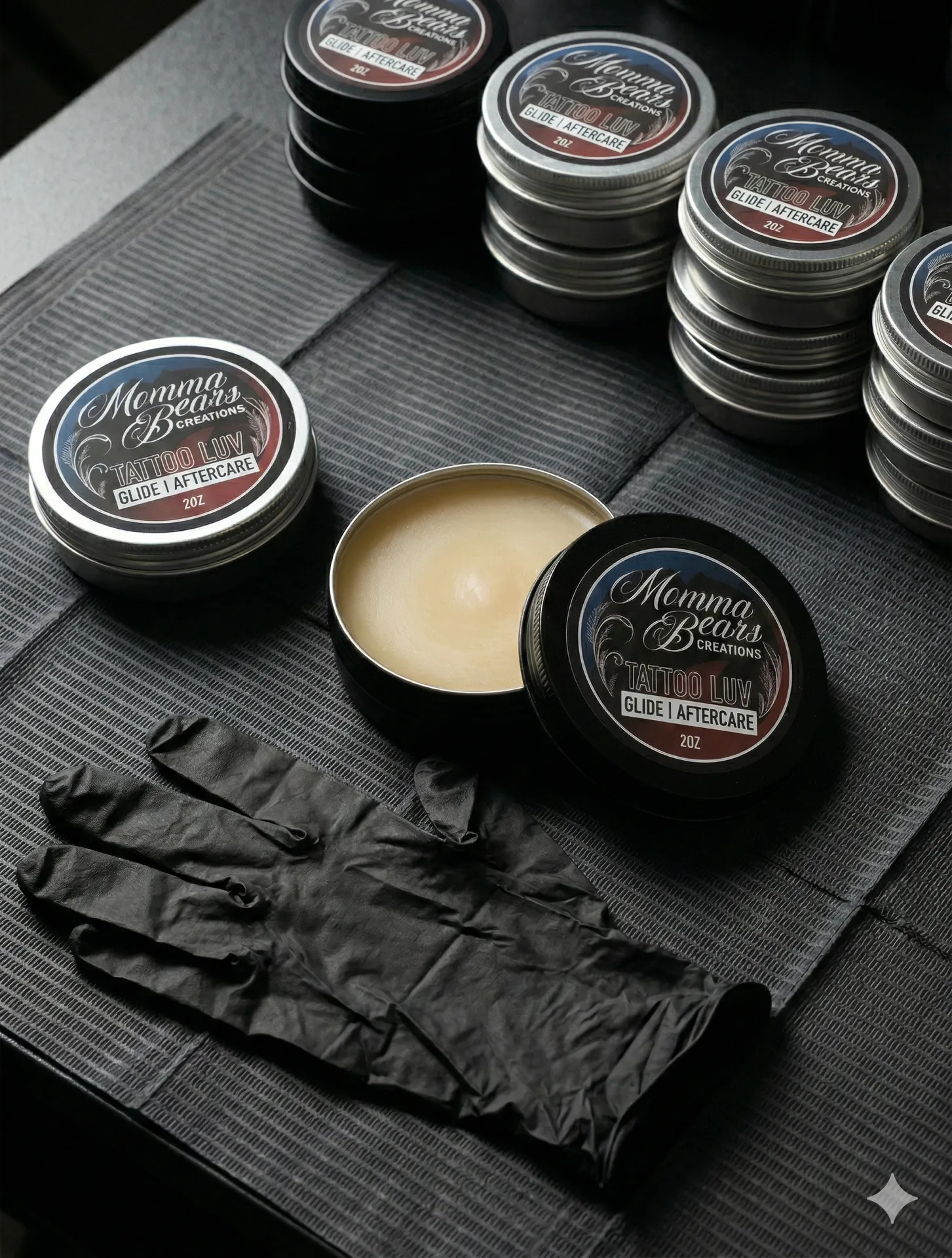
When skin is dry or patchy coming into a session, Tattoo Luv glide provides consistent slip without product overload — the natural formulation distributes evenly across variable texture rather than pooling on dry patches the way heavier petroleum products can.
How Stencil Behavior Changes
Spring is where artists using winter protocols can run into friction they don’t expect.
What you may notice:
- Higher ambient humidity can affect stencil adhesion — some artists find stencils set faster, while others see more smearing during application if skin surface is slightly damp
- Warming skin temperature changes how transfer gel behaves
- Clients coming in from warmer outdoor temperatures may have slightly perspiring skin — something that wasn’t a factor in January
- Dry-skin adhesion habits from winter may now be over-compensating
Adjustments worth trying:
Let clients acclimate to your studio temperature for a few minutes before starting. Someone who walked in from a warm car or cool morning air may have skin that’s still settling.
Check for any surface moisture before applying stencil, particularly on areas that were under heavy winter layers all season. A light wipe-down with a clean, dry wipe if needed.
If you’ve been applying more transfer gel or using longer dry times to compensate for winter dryness, many artists find they can start dialing that back in March. Over-applying in spring humidity conditions can reduce adhesion rather than improve it.
A consistent, stencil-safe glide product matters here too. When Tattoo Luv glide is applied after the stencil is set, the natural formula won’t lift or smear the design the way some petroleum-based products can — one less variable to manage while you’re recalibrating for the season.
Glide in Warmer Conditions
Warmer, better-hydrated skin behaves differently under glide. That’s not a problem — it’s a calibration point.
What you may notice:
- Skin doesn’t absorb product as aggressively as it did in January and February
- Reapplication frequency may drop compared to your coldest-month sessions
- Product distributes differently on warmer, slightly more supple skin than on tight, dry winter skin
- If your studio warms up, product consistency can shift slightly — keeping glide at a consistent temperature helps
Practical adjustments:
If you were compensating with heavier initial applications during winter, scaling back as spring progresses is worth trying. March and early April sessions are a natural recalibration point.
“I noticed the difference my first winter using Tattoo Luv. It actually works better on dry winter skin than the petroleum stuff I used to use. Goes on smoother, doesn’t disappear as fast.”
— Mike Mavretic, Skin Deep Tattoo LLC
That consistency Mike noticed in winter carries into spring. Natural formulations tend to adapt across seasonal skin changes more smoothly than petroleum-based alternatives — less dramatic swing between “using too much” and “not enough” as conditions shift. It’s part of why artists who make the switch tend to stay with it year-round.
Client Pre-Session Guidance: Spring Edition
Spring simplifies the client prep conversation — and that’s worth communicating.
What winter required: Daily moisturizing for three or more days before the appointment, specifically to compensate for significant barrier compromise.
What spring clients actually need:
- Keeping the area moisturized in the days before — daily routine-level care is enough
- Staying hydrated
- No sun exposure on the area — this becomes relevant again in spring when clients start spending time outside
- Showing up with normally-cared-for skin, not product-heavy from over-applying that morning
A simple booking note:
“Spring skin is in better shape than winter, so prep is straightforward. Keep the area moisturized in the few days before, stay hydrated, avoid any sun on the spot, and you’re set.”
Shorter conversation, easier instructions. Spring clients appreciate it.
Studio Environment: What Changes in Spring
Winter had you managing humidity and fighting dry heat. Spring shifts the balance.
Humidifier: Less critical now. If you’ve been running one all winter, you can assess based on your actual studio conditions rather than running it by default. Returning outdoor humidity means indoor air won’t be as aggressively dry.
Temperature: This is the new variable. Spring days can swing significantly, and studios that hold heat can get uncomfortable fast. An uncomfortable client moves. Monitoring studio temperature more actively and adjusting airflow accordingly pays off across a full spring season.
Ventilation: More airflow than winter allowed is generally good for air quality and client comfort, but direct drafts on the work area are still worth managing.
Direct sunlight: If your studio gets spring sun through windows, that adds uneven heat load. Worth accounting for before the warm days fully arrive.
Consistent client comfort — temperature and humidity in a range where they’re relaxed and still — is the goal. Spring requires active monitoring rather than the set-and-forget approach winter allowed.
When Tattoo Luv glide is stored at a consistent temperature, formulation stays stable. If your studio gets warm quickly in spring, keeping product away from direct sun and heat sources helps maintain consistent performance session to session.
Client Aftercare in Spring: What to Adjust
Spring aftercare guidance is simpler than winter’s — but it’s worth updating what you communicate to clients.
Key differences from winter:
- Clients don’t need the aggressive moisture compensation winter required
- Standard aftercare frequency is appropriate for most spring clients
- Sun exposure on fresh tattoos is a real concern starting in spring — worth adding to your post-session guidance
A practical script for spring clients:
“Keep it moisturized, keep it out of the sun, and reach out if you have questions. Spring is a genuinely good time to get tattooed — just protect the area from sun exposure while it’s fresh.”
Short and clear. Clients can handle simple instructions.
Product quantity:
Spring clients won’t go through aftercare product the way winter clients did. Calibrate accordingly — they need enough to get through the aftercare period comfortably, but not the oversized supply winter’s dryness demanded.
When recommending take-home aftercare, Tattoo Luv Lotion Bar moisturizes during the aftercare period without the greasy residue that can make petroleum products uncomfortable in warmer weather. Spring and summer clients often respond better to lighter-feeling natural formulas.
Before the Season Picks Up
Spring brings a seasonal surge — clients who held off all winter start booking, walk-ins return, and the pace increases quickly. A few things worth addressing before volume picks up:
- Glide stock: Order before you need it. Running low mid-season creates friction you don’t need. Wholesale inquiry →
- Aftercare for retail: Client interest in take-home product increases with seasonal tattoo volume. Worth having inventory ready.
- Studio temperature: Assess airflow and temperature control before the warm days arrive, not after.
- Stencil calibration: Revisit what’s working now that conditions have shifted. Winter habits may need adjusting.
- Client prep messaging: Update any pre-appointment instructions you send. Winter prep guidance isn’t right for March.
Small adjustments now save friction across a full spring season.
Get Ready for the Season
Tattoo Luv Lotion Bar: Natural glide and aftercare in one product. Performs consistently across spring’s variable skin conditions — from post-winter dryness in early March to the more hydrated skin of late April.
Wholesale Pricing: Stock before spring picks up. Inquiry form available for shops and studios.
Resources for Artists
Sponsored Artist Program: Join Central PA’s community of professional artists. Apply here →
Questions? Reach out at [email protected]
Tattoo Luv is made by Momma Bears Creations in Enola, PA. Professional-grade, 100% natural, trusted by Central PA artists.