Key Takeaways
- Winter skin is different: Cold air, indoor heating, and hot showers all compromise the skin’s protective barrier.
- Pre-session prep matters more: Have clients moisturize daily for 3 days before their appointment.
- Stencil adjustments: Warm the skin slightly, use thin layers of transfer gel, and allow extra dry time.
- Reapply glide more often: Dry skin absorbs product faster than summer skin.
- Studio environment: Consider a humidifier and minimize direct airflow on the work area.
- Know when to reschedule: Severely compromised skin won’t give good results.
February. Your studio is warm. Outside is brutal. And every client walking through your door has the driest skin they’ve had all year.
You’ve noticed it: stencils that don’t stick as well, skin that drinks up product faster than usual, clients complaining about tightness before you even start. Winter creates real challenges for tattooing, but they’re manageable once you understand what’s happening.
Here’s what works.
Why Winter Skin Is Different
It’s not your imagination. Cold weather fundamentally changes skin condition.
What’s happening:
- Cold air holds less moisture, so humidity drops dramatically
- Indoor heating dries air out even further
- Clients are constantly moving between cold outside and dry heat inside
- Hot showers (everyone’s winter coping mechanism) strip natural oils
- Skin barrier function decreases, leading to faster moisture loss
The result: skin that’s tighter, flakier, and less cooperative than what you see in summer.
This affects your work in real ways:
- Stencils may not adhere as well to dry, flaky skin
- Ink saturation can be affected by skin texture
- Aftercare period may take longer in dry conditions
- Clients are more prone to excessive flaking post-session
Pre-Session Skin Prep
What you do before the needle touches skin matters more in winter.
Client instructions (send in advance):
“For your appointment, please moisturize the area daily for the three days before. Use a fragrance-free lotion. Don’t over-moisturize the morning of, but keep the skin healthy leading up to your session.”
This gives you better canvas to work with. Skin that’s been neglected all winter won’t transform overnight, but a few days of attention helps.
Day-of prep:
- Clean the area thoroughly (as always)
- Assess the skin condition before proceeding
- If skin is particularly dry or flaky, consider a light exfoliation with a clean towel
- Let the skin rest for a few minutes after cleaning before applying stencil
For severely dry skin, you may need to reschedule. It’s better to wait a week than to fight difficult skin all session.
Stencil Adhesion in Dry Conditions
Dry skin is the enemy of stencils. Here’s what helps:
Use appropriate stencil products: Some products grip better on dry skin than others. If you’re having adhesion issues, experiment with alternatives.
Warm the skin slightly: Not hot, just warm. Cold, tight skin doesn’t accept stencils as well. A few minutes in a warm studio helps.
Don’t over-apply transfer gel: A thin, even layer works better than globbing it on. Excess product can actually reduce adhesion.
Let it dry completely: Give stencils adequate dry time before starting. Winter skin takes longer to set a stencil than summer skin.
Have backup stencil supplies: If the first application fails, you need to start over. Stock accordingly.
Glide Performance in Winter
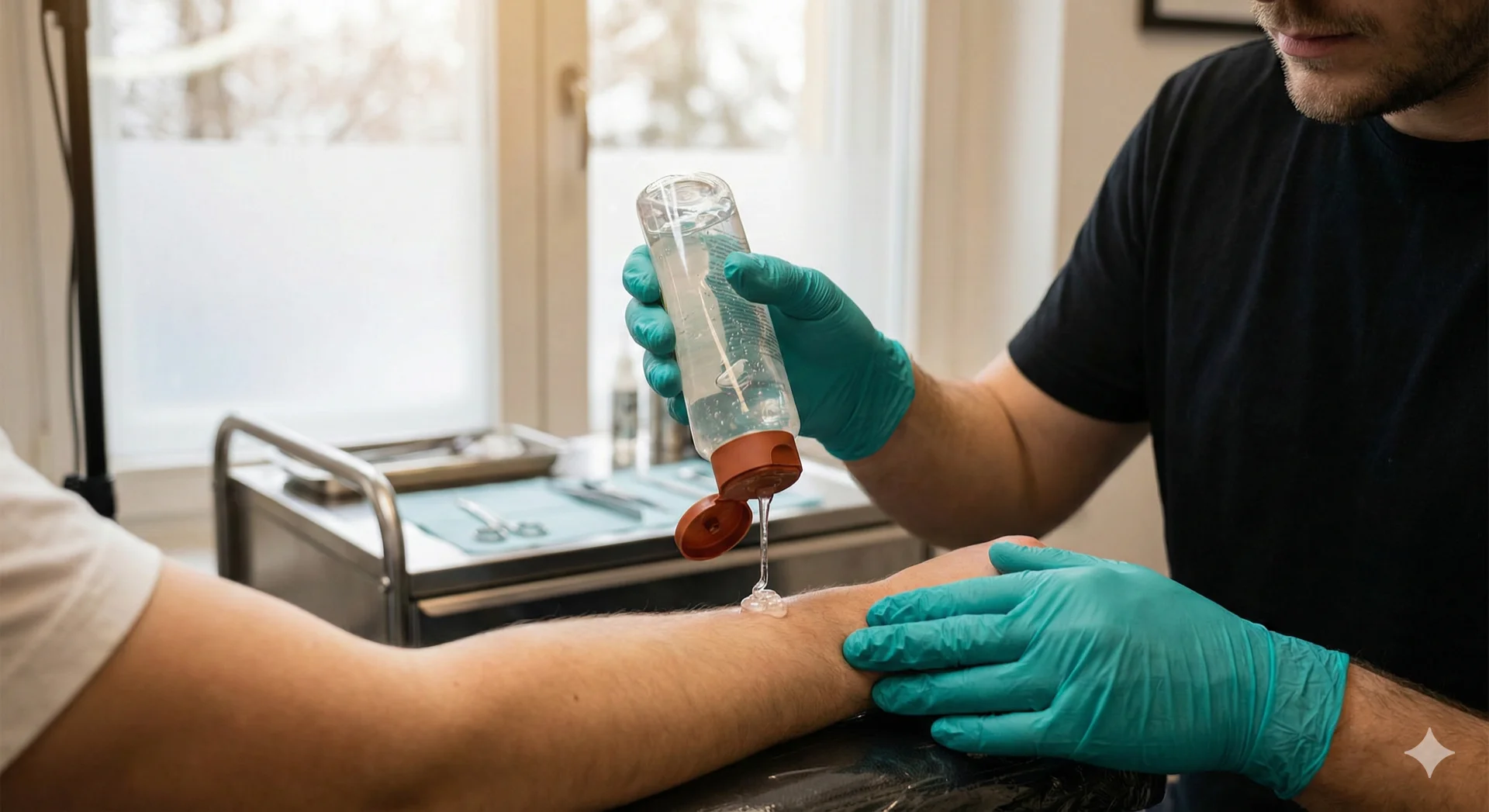
Your glide or barrier product behaves differently on dry skin.
What you might notice:
- Product absorbs faster than usual
- Need to reapply more frequently during sessions
- Consistency may feel different on dry vs. hydrated skin
Adjustments:
- Apply slightly more product at the start
- Reapply more frequently than you would in summer
- Keep product at consistent room temperature (cold product performs differently)
Natural glide products tend to perform more consistently across skin conditions because they work with the skin rather than just sitting on top. That’s one reason artists are moving away from petroleum-based options.
“I noticed the difference my first winter using Tattoo Luv. It actually works better on dry winter skin than the petroleum stuff I used to use. Goes on smoother, doesn’t disappear as fast.”
— Mike Mavretic, Skin Deep Tattoo LLC
Studio Environment
Your workspace contributes to the problem or the solution.
Humidity matters:
Most heated indoor spaces drop to 20-30% humidity in winter. Skin (and sinuses, and everyone’s comfort) prefers 40-50%.
Consider a humidifier in your workspace. Not directly on the tattooing area, but in the room. Maintaining reasonable humidity helps both you and your clients.
Temperature balance:
Warm enough for client comfort (they’re often partially undressed), but not so warm that you’re overheating. Uncomfortable clients move more. Moving clients are harder to tattoo.
Airflow:
Forced air heating creates drafts. Drafts dry skin faster. Position your setup to minimize direct airflow on the tattooing area.
Adjusting Your Technique
Some artists make subtle technique adjustments for winter conditions:
Work slightly slower: Dry skin can be more reactive. Give it a moment to recover between passes.
Watch for over-working: Dry, compromised skin shows trauma faster. Pay attention to how the skin is responding.
Check saturation more frequently: Dry skin can give the appearance of good saturation when it actually needs another pass.
Be prepared for more touch-ups: Winter tattoos may need more touch-up visits. Set that expectation early.
Winter Aftercare Guidance
Your standard aftercare applies, but winter clients need additional coaching.
Tell them:
- “Your skin is working against you right now because it’s so dry. You may need to moisturize more frequently than you would in summer.”
- “Keep showers warm, not hot. Hot water feels great but strips moisture faster.”
- “Run a humidifier in your bedroom if you have one. It helps your skin recover.”
- “Indoor heating is harsh on fresh tattoos. Moisturize whenever it feels tight or dry.”
Product recommendations:
Winter clients go through aftercare product faster. Make sure they leave with enough, or tell them where to get more. Running out mid-aftercare period is worse in winter than summer because the fallback (just keep it clean and let it recover on its own) doesn’t account for aggressive moisture loss.
Client Communication
Manage expectations early.
At booking:
“February appointments can be challenging because winter skin is typically very dry. Please moisturize the area daily leading up to your appointment. This makes a real difference in how your session goes and how the tattoo turns out.”
At the session:
“Your skin is on the drier side today, which is normal for February. We’ll work with it, but I want you to be extra diligent about aftercare. Moisturize more frequently than you normally would.”
At checkout:
“Remember, winter is hard on fresh tattoos. Keep it moisturized, keep your showers warm instead of hot, and reach out if you have any questions.”
When to Reschedule
Sometimes the right call is to wait. Signs that you should consider rescheduling:
- Skin is cracked or bleeding before you start
- Severe eczema or psoriasis flare-up in the area
- Client mentions they’ve been neglecting the area completely
- Stencil won’t stick after multiple attempts
- Client seems uncomfortable or in pain from skin condition alone
This isn’t about being difficult. It’s about getting good results. A week of serious moisturizing can transform skin condition. A tattoo on severely compromised skin will be frustrating for both of you.
Stock Up for Winter
Make sure your studio is ready for winter-specific challenges:
- Extra stencil supplies (for re-applications)
- Adequate glide/barrier product (you’ll use more)
- Aftercare product for retail (clients need more)
- Client handouts with winter-specific aftercare tips
- Humidifier (for studio environment)
Running low mid-season creates unnecessary problems.
The Winter Advantage: Tattoo Luv
Natural products outperform petroleum-based alternatives on dry winter skin. The ingredients work with skin biology rather than just creating a barrier that gets absorbed and disappears.
Tattoo Luv Lotion Bar: Same product for session glide and client aftercare. Performs consistently even on dry winter skin.
Wholesale Pricing: Stock up before winter rush. Inquiry form →
Resources for Artists
Sponsored Artist Program: Join Central PA’s community of professional artists. Apply here →
Questions? Reach out at papabear@mommabears.us
Tattoo Luv is made by Momma Bears Creations in Enola, PA. Professional-grade, 100% natural, trusted by Central PA artists.